Gum disease: the reason most of the implants on this site exist
Bacteria inflame the tissue holding the tooth, the inflammation eats bone, and the tooth is eventually lost. Almost every implant page here describes fixing damage this caused.
How it is done here ONE Dental Clinic
The publisher is a registered patient facilitator, paid by clinics when a reader becomes a patient through its agency. How we make money
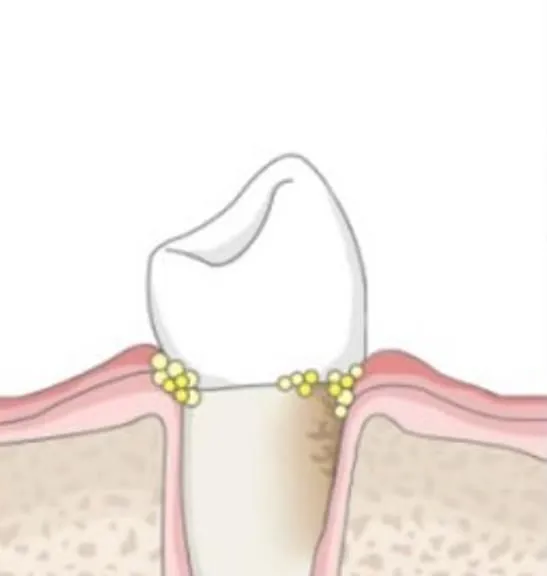
Periodontal disease is a disease of the tissue that supports the tooth: gum, ligament and bone. Bacteria invade, the body inflames in response, and if it is left, the clinic’s own description is exact: it progresses to loss of alveolar bone and loss of the tooth.
Four stages, in one row of pictures
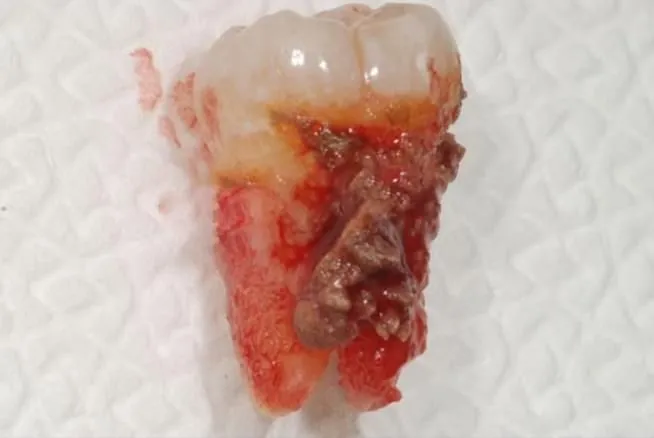
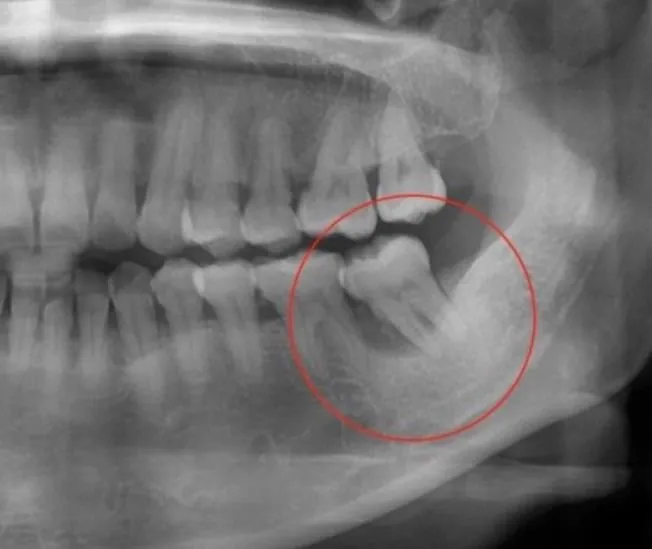
The clinic shows it as a progression. Normal gum and gum bone. Then calculus above the gum line. Then calculus below the gum line, where a toothbrush cannot reach it. Then inflammation that has advanced into the bone itself. By the last of those the tooth is being held by less than it was designed to be held by, and the photograph on this page of a tooth extracted because of periodontal disease is what the end of that road looks like.
The treatment
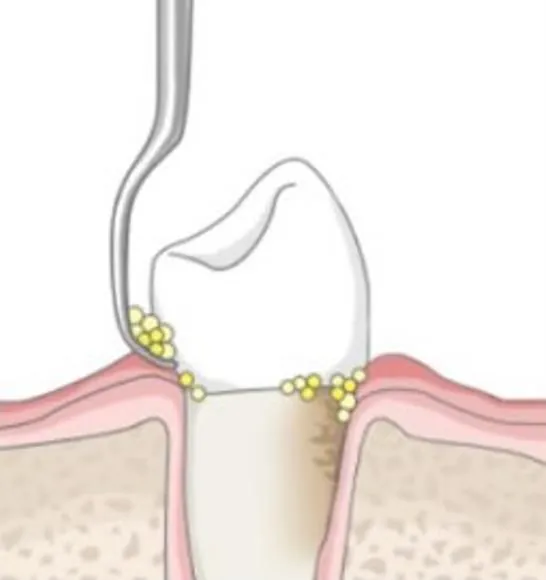
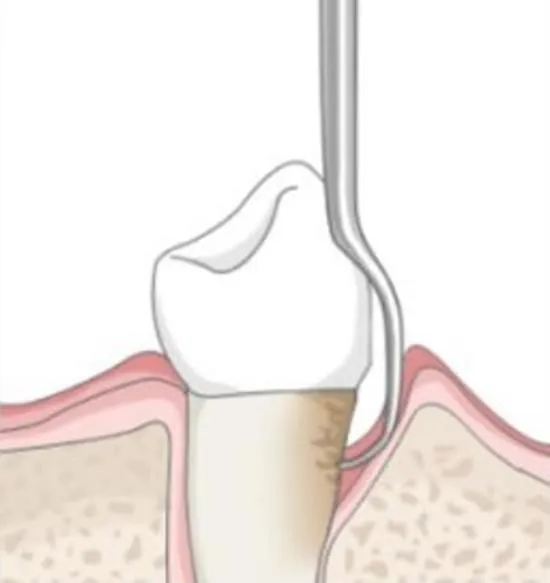
Scaling first, then curettage. The clinic’s description: a procedure that removes not only the diseased tissue on the side wall of the periodontal pocket but also the inflammatory connective tissue at the alveolar bone. It is done in stages, and the three-panel illustration on this page is those stages.
Why this page sits alongside implants
Because the honest version of the implant conversation starts here. An implant replaces a tooth that periodontal disease took. If the disease is still active, it will attack an implant too, and that is called peri-implantitis. Treating the gums is not a preliminary; it is the thing that decides whether the expensive part lasts.
- What it attacks
- Gum, periodontal ligament and alveolar bone.
- Cause
- Bacterial invasion and the inflammatory response to it.
- If left
- Loss of alveolar bone, then loss of the tooth.
- Treatment
- Scaling, then periodontal curettage, in stages.
- Why it matters to implants
- Active disease attacks implants too.
Clinical photographs
This article is information, not medical advice, and reading it does not create a doctor-patient relationship. The Seoul Glow is a registered facilitator: we coordinate care, we do not practise medicine and we do not decide what treatment is right for you. No outcome can be guaranteed by anyone. Discuss any procedure with a licensed physician who has examined you.