Root canal treatment, and the core that has to go in afterwards
The nerve is removed, the canal is cleaned and sealed, and then the hollow tooth has to be rebuilt with something hard enough to be crowned. The second half is the part patients are not told about.
How it is done here ONE Dental Clinic
The publisher is a registered patient facilitator, paid by clinics when a reader becomes a patient through its agency. How we make money
Root canal treatment is what saves a tooth whose nerve has died or become irreversibly inflamed. The alternative is extraction, and extraction is what leads to every implant page on this site, so this treatment is worth understanding properly.
Six steps
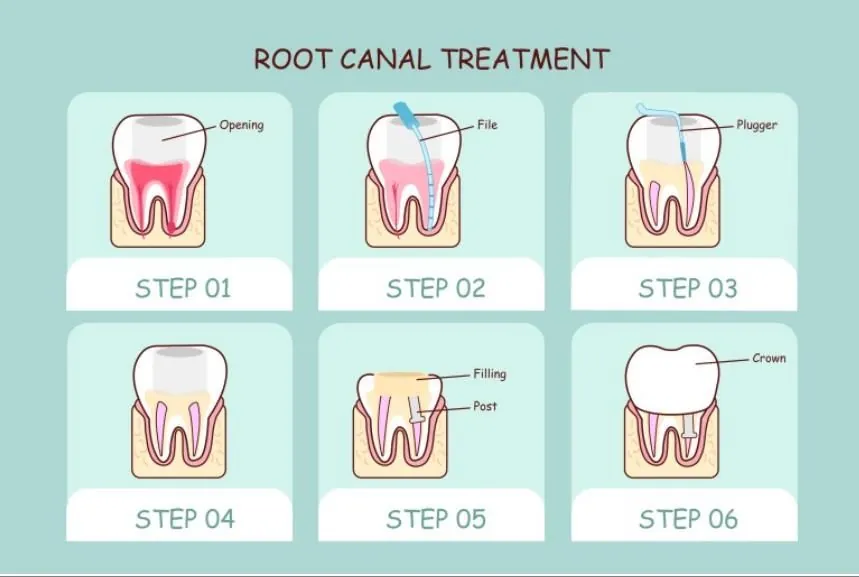
The clinic sets it out in six: opening the tooth, filing the canal, compacting with a plugger, the cleaned canal, filling and post placement, and finally the crown. The illustration on this page is that sequence.
The resin core
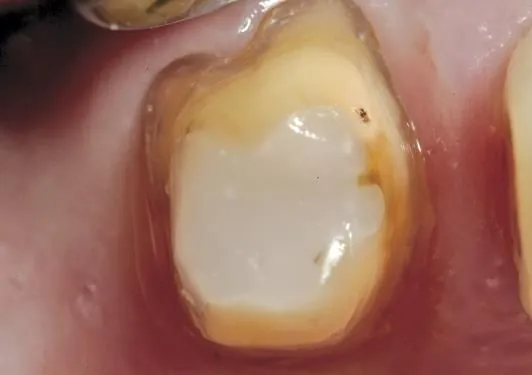
What is less often explained is what happens between step five and the crown. A tooth that has had its nerve removed has also had a hole cut into it and its inside hollowed out. It is brittle and it has no shape left to hold a crown. So the cavity is restored with a hard material, which the clinic calls a resin core, and the crown goes onto that.
This is why root canal treatment quotes often look incomplete. The endodontics is one price, the core is another, and the crown is a third. Ask for all three.
- What it does
- Removes the nerve, cleans and seals the canal.
- Steps
- Six, ending at the crown.
- Afterwards
- A resin core restores the hollowed tooth.
- Then
- A crown. A treated tooth is brittle and usually needs one.
- Alternative
- Extraction, then an implant or a bridge.
Clinical photographs
This article is information, not medical advice, and reading it does not create a doctor-patient relationship. The Seoul Glow is a registered facilitator: we coordinate care, we do not practise medicine and we do not decide what treatment is right for you. No outcome can be guaranteed by anyone. Discuss any procedure with a licensed physician who has examined you.