Where the difficult graft is an ordinary Tuesday
Bone that is not there yet, and a sinus floor sitting too low, are the two problems that send implant cases somewhere else. This Gangnam clinic is built around keeping them, with an oral surgeon in the building.
The publisher is a registered patient facilitator, paid by clinics when a reader becomes a patient through its agency. How we make money
Most of implant dentistry is not difficult. The difficulty sits in a minority of cases, and it is nearly always the same difficulty: there is not enough bone to hold a fixture, or the sinus floor sits too low to place one beneath it. Many clinics refer those cases elsewhere. ONE Dental in Gangnam is built around keeping them.
What the numbers do and do not say
The clinic’s own cumulative totals are 22,729 patients treated and 69,377 implant fixtures placed, unaudited, as at 6 November 2024. A figure that size does not tell a patient the clinic is good. It tells them the clinic has met the awkward version of most cases more than once, which is a different and more useful claim.
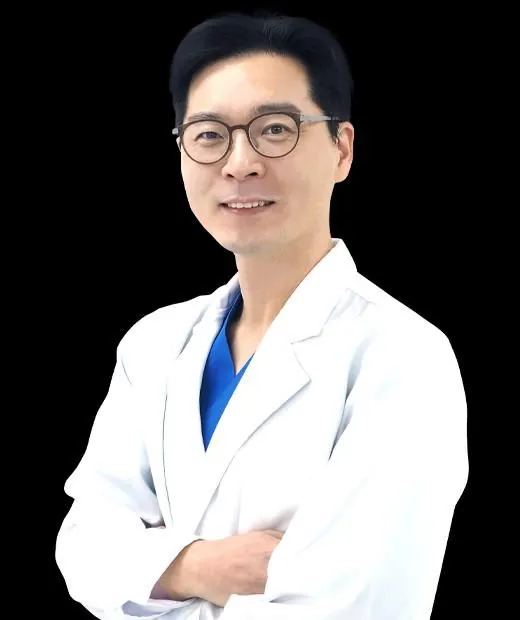
Six dentists work here. Four hold specialist certification from Korea’s Ministry of Health and Welfare: three in integrated dentistry, one in oral and maxillofacial surgery. That last one changes a patient’s calendar more than any equipment list, because a graft another practice would refer out is an ordinary operating day in this building.

Bone first, fixture second
Grafting is graded here from A to D, up to vertical augmentation with titanium mesh. Sinus elevation is performed by both the crestal and the lateral window routes, which matters for a reason patients rarely hear: a clinic that owns one technique tends to recommend that technique. Holding both lets the anatomy decide.
Four implant systems are stocked in the building, among them Osstem, Dio and Point, alongside mini and short fixtures for bone that cannot take a standard one. Planning is done on 3D CT with intraoral scanning, and the surgical guide is printed for one mouth and used once. Navigation guided placement lets the surgeon work through a smaller opening, which is usually why swelling is milder than patients brace for.
How a case from abroad is actually shaped
The first visit is CT, scan and a written plan. If bone has to be built, the graft and the placement happen in one session or two, depending on what the scan shows. The fixture then needs time to integrate with the bone. That period is biology and it is not compressed to fit a flight. The final crown follows it.
In practice that means two trips with a gap between them, and the gap belongs in the plan from the start rather than being discovered after a ticket is booked. Sedation is available where the surgical session is one the patient would rather not remember.
When an implant is the wrong answer
One missing tooth has three honest answers, and the clinic’s own patient material sets them beside each other instead of steering:
- A bridge is fixed, but the two neighbouring teeth are cut down to carry it and take the load afterwards.
- A partial denture removes very little tooth and can be taken out and cleaned, at the cost of a settling in period and a clasp that can show.
- An implant stands on its own, so healthy neighbours are untouched. Two fixtures can carry three teeth as an implant bridge.
There is also the answer nobody sells: stay home. A single implant in good bone is treatable in most countries, and flying to Seoul for it is a shopping decision rather than a clinical one.
This article is information, not medical advice, and reading it does not create a doctor-patient relationship. The Seoul Glow is a registered facilitator: we coordinate care, we do not practise medicine and we do not decide what treatment is right for you. No outcome can be guaranteed by anyone. Discuss any procedure with a licensed physician who has examined you.